BBC - Hereford and Worcester - Features - Marcel bent over backwards
Some of you will have known Marcel Callow, Worcester's India Rubber Man. There are some wonderful pictures here.
Saturday, June 25, 2005


Edward Elgar
Edward Elgar - Web site of The Elgar Society, Elgar Birthplace and Elgar Foundation deserves a mention as the authoritative place for information on old Eddie.
Tuesday, June 21, 2005
Battle of Worcester
BBC - Hereford and Worcester - Features - Battle of Worcs
All sorts of material from BBC, Commandery Museum and other local organisations giving background, timelines, pictures and text about the Civil War and its aftermath.

All sorts of material from BBC, Commandery Museum and other local organisations giving background, timelines, pictures and text about the Civil War and its aftermath.
Monday, June 20, 2005
Worcester News
The Worcester News (the new name for the Worcester Evening News) Website on Worcester news and Worcester sport information gateway brought to you by this is Worcestershire has an archive search, which not only helps you with news stories from the last few years, but also indexes Michael Grundy's wonderful articles about local history.

Friday, June 10, 2005

Friday, April 22, 2005
Ride a Cock-horse (Harpers.org)
Here's the origin of the mythical animal the Cock Horse, best known frok the nursery rhyme. Nothing local about it, although I found it because it has Worcester in it as a surname.A Cock-horse (Harpers.org)
Thursday, March 24, 2005
Frederick George Dancox VC
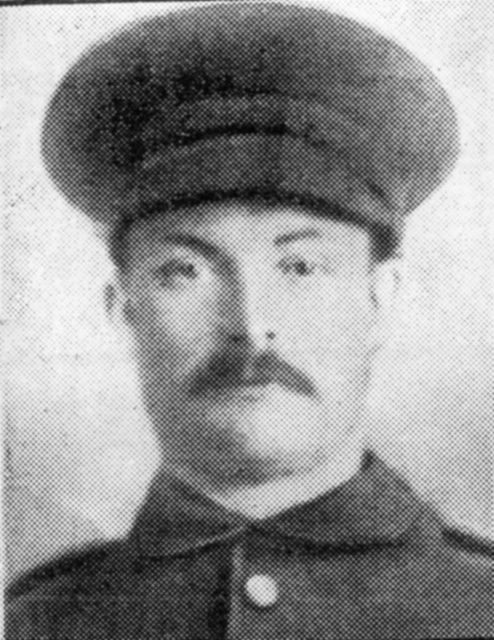
Pte Dancox VC
Frederick George Dancox was a soldier of the Worcestershire Regiment who was awarded the Victoria Cross for his actions at the Boesinghe Sector in Belgium during World War One in October 1917. He was killed in action at the end of the following month.
He is commemorated in Worcester in the name of the sheltered housing development Dancox House in St Clements Gardens
More information on this and thousands of other topics at Wikipedia, the alternative encyclopedia of the Internet.
Dancox Wikipedia Article
Sunday, March 13, 2005

Worcestershire Past
Worcestershire Past: "Sir Edward Elgar Statue at Worcester - Photo John Stafford 2001"

Worcestershire Past is my oldest web site. It started as a lottery project by Worcester Writers' Circle as Worcestershire History Encyclopaedia. I kept most of the articles for which I still had publishing rights in this successor site. I add a little more occasionally, so if you have an article illustrated with a digital picture, I will consider it for the site. Any shorter pieces, or just pictures you think others would like to see, can be published here on Vigornia.
Worcestershire Past is my oldest web site. It started as a lottery project by Worcester Writers' Circle as Worcestershire History Encyclopaedia. I kept most of the articles for which I still had publishing rights in this successor site. I add a little more occasionally, so if you have an article illustrated with a digital picture, I will consider it for the site. Any shorter pieces, or just pictures you think others would like to see, can be published here on Vigornia.
Saturday, January 22, 2005
Worcestershire Maps
This project provides on-line access to digitised 18th and 19th century maps in the county, together with their attached documentary evidence. Together, these transform flat maps into a powerful searchable research tool.
Only a part of the capabilities of the system can be demonstrated on-line. The full system is available at the offices of the Historic Environment and Archaeology Service.
The site is under development, but the following pages provide access to an internet mapping system, through which you can view modern and historic maps, and also provides information about why the original maps were created.
Only a part of the capabilities of the system can be demonstrated on-line. The full system is available at the offices of the Historic Environment and Archaeology Service.
The site is under development, but the following pages provide access to an internet mapping system, through which you can view modern and historic maps, and also provides information about why the original maps were created.
Sunday, January 16, 2005
Railways in Worcestershire
My Worcester Tramways article last month prompted a reply from Tavis Pitt about a site I hadn't seen before.Index page for Railways in Worcestershire.
Thanks, Tavis. It's a really good collection of tram pictures you referred me to.
Thanks, Tavis. It's a really good collection of tram pictures you referred me to.
Worcester People & Places - Articles by Bill Gwilliam
Worcester People & Places has dozens of extracts from the late Bill Gwilliam's published works. Fascinating reading.
Welcome to Project Gutenberg - Project Gutenberg
Welcome to Project Gutenberg - Project Gutenberg: "Project Gutenberg is the oldest producer of free electronic books (eBooks or etexts) on the Internet. Our collection of more than 13.000 eBooks was produced by hundreds of volunteers. Most of the Project Gutenberg eBooks are older literary works that are in the public domain in the United States. All may be freely downloaded and read, and redistributed for non-commercial use"
Wednesday, December 29, 2004
Worcester's Electric Trams
by John Stafford

There had been horse-drawn trams run by various companies on Corporation rails for more than twenty years when there began moves to electrify the system. After visits to towns such as Kidderminster and Birmingham, where electric and steam trams were already operating, the council decided to build an electric system. The construction of the electric tramway system in 1903-4 involved upheaval on a scale that has not been matched by any more recent improvements. It involved the closure of important streets such as Broad Street for days at a time, not only to wheeled traffic but also to pedestrians who were unwilling to cross expanses of mud to reach the shops. Most of the work was done with spades and wheelbarrows, and the only machine which we would regard as modern was a lifting device for erecting the posts which carried the electricity wires. By the end of 1904, a line to the Berwick Arms was under construction, completing access from all the outer areas of the city along The Tything, Lowesmoor, London Road and St. John's. The electric trams were faster than horse trams or horse buses, but were unpopular with many residents because of the noise they made when crossing points. The tramways were purchased back by the Corporation in 1928 when the operating rights of the company lapsed, and the trams were replaced by motorbuses, which in their turn had become faster vehicles. The only relics of the tramways that are still with us are the posts, which are to be found along various parts of the routes, in use today as lampposts. They are easily identified by the tramway symbol of the magnet, which is cast onto the base of the post.
Subscribe to:
Posts (Atom)


